Wood pallets play a critical role in transporting and storing goods efficiently. Among global standards, the most widely used are the European pallet (EPAL/EUR) and the American pallet (GMA).
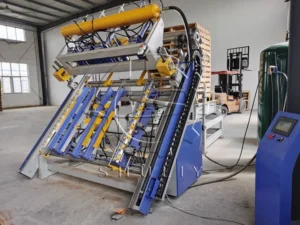
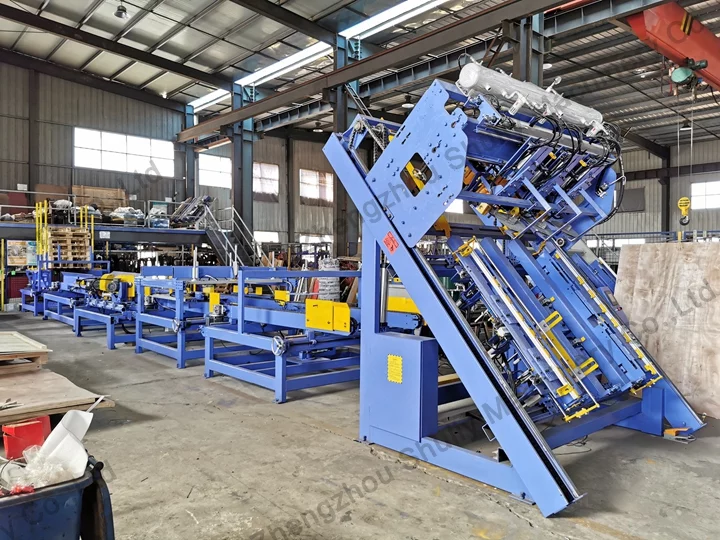
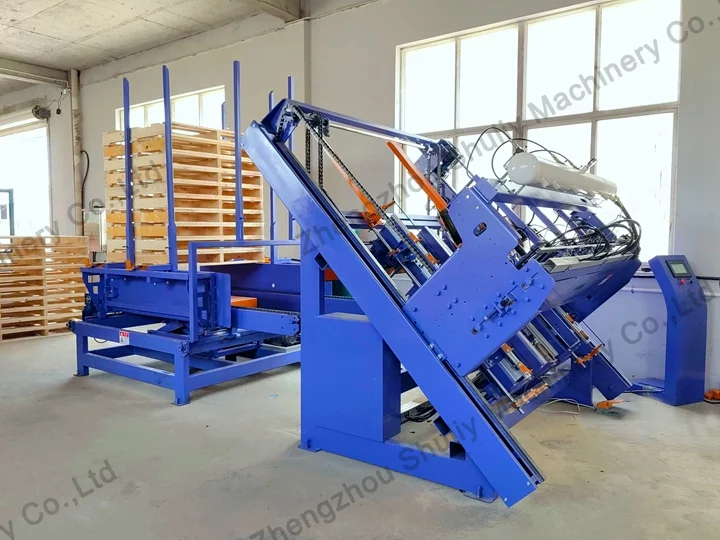
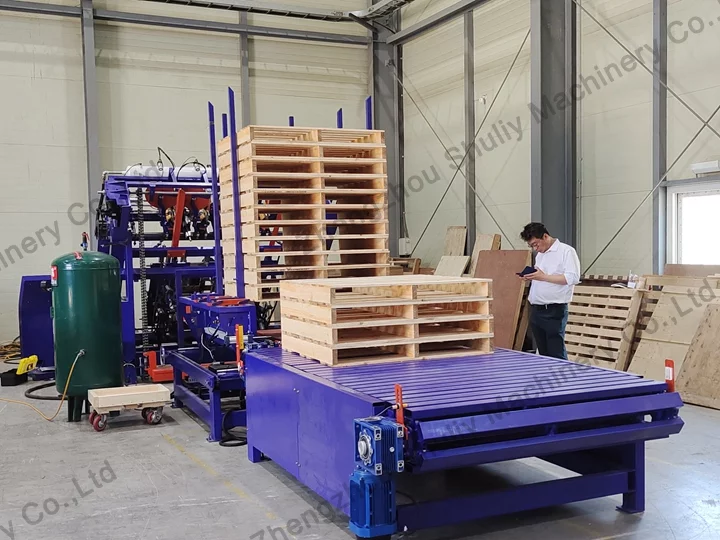
These two systems dominate different markets and are closely related to pallet production equipment, such as the wood pallet machine, which determines production efficiency and structural accuracy.
European Standard Pallet (EPAL/EUR)
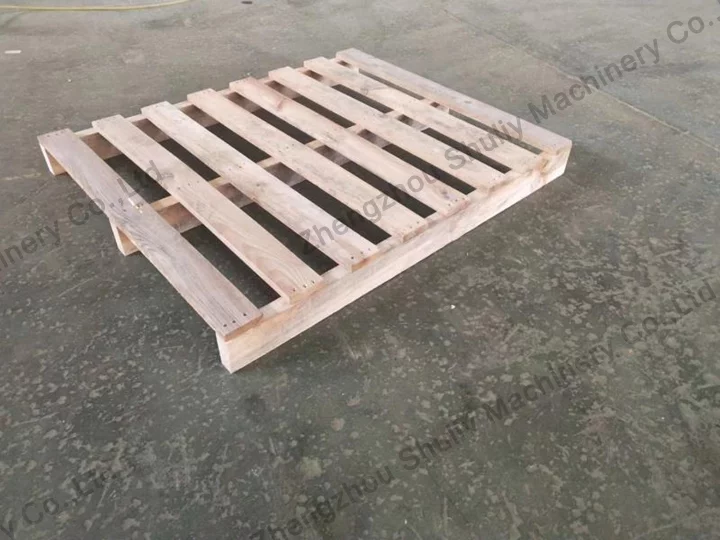
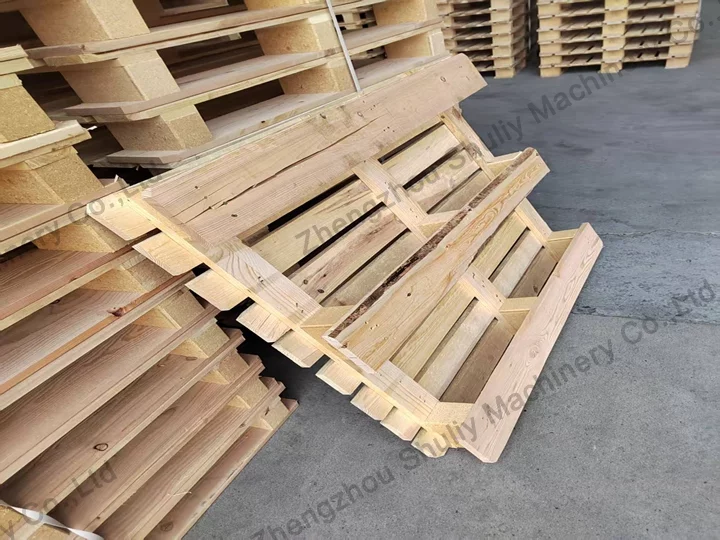
The European pallet, also known as EPAL or EUR pallet, is a highly standardized wooden pallet system widely used across Europe and global supply chains.
The most common model is EUR-1 with the following specifications:
- Size: 1200 × 800 × 144 mm
- Structure: 9 support blocks (3 stringers), 11 top boards
- Weight: about 25 kg
- Load capacity:
- Dynamic load: 1500–2000 kg
- Static load: 4000–6000 kg
- Diseño: four-way entry for forklifts and pallet jacks
- Material: softwood such as pine or spruce
- Certification: EPAL logo + IPPC/ISPM15 heat treatment mark
EPAL pallets are highly standardized, allowing cross-border reuse and compatibility with automated warehouse systems.
American Standard Pallet (GMA)
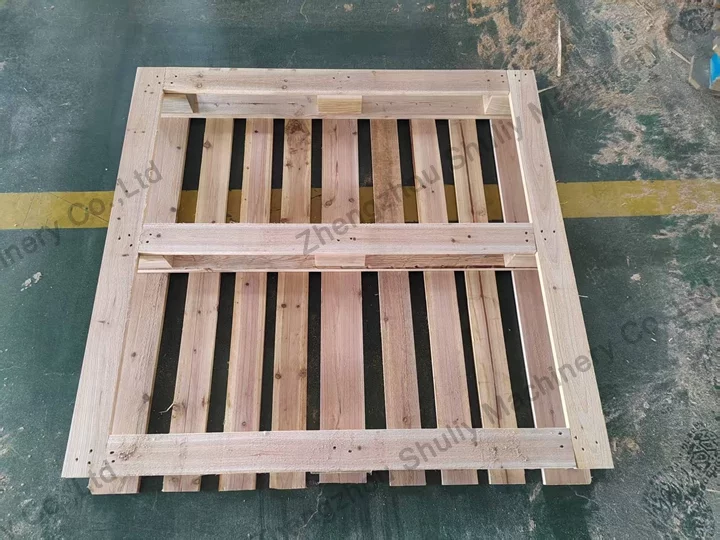
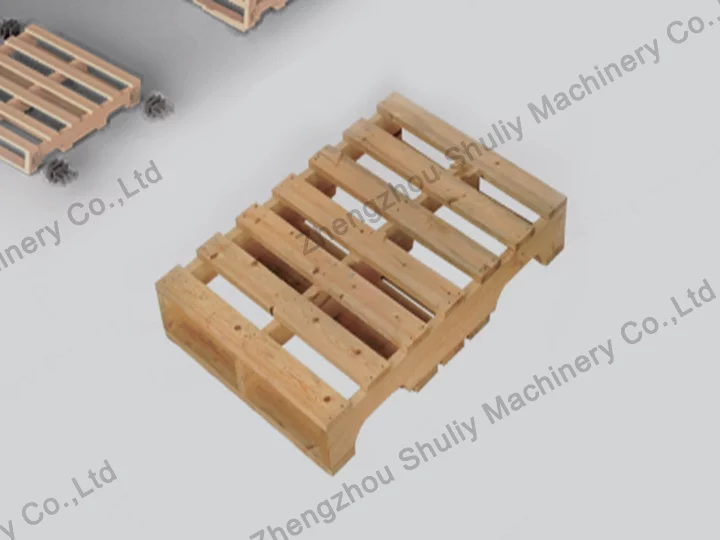
The American pallet, commonly called the GMA pallet, is widely used in North America, especially in retail and distribution logistics.
Typical specifications:
- Size: 1219 × 1016 mm (48 × 40 inches)
- Structure: 3–4 stringer beams supporting top and bottom boards
- Weight: 15–22 kg
- Load capacity:
- Dynamic load: about 1134 kg
- Static load: around 2086 kg
Unlike EPAL pallets, GMA pallets do not follow a strict global standard, making them more flexible but less consistent in quality.
Key Differences Between EPAL and GMA Pallets
Size & Shape
- EPAL: 1200 × 800 mm (narrower and longer)
- GMA: 1219 × 1016 mm (wider and more square)
Structure Design
- EPAL: 9 block-style support feet, four-way entry.
- GMA: 3 stringer beams, mostly two-way entry.
Strength & Durability
- EPAL pallets: higher load capacity and stronger structure.
- GMA pallets: lighter and cheaper but less durable.
Standardization
- EPAL: strict EPAL/ISO system, globally interchangeable.
- GMA: no unified global standard, mainly North America.
Logistics Compatibility
- EPAL: ideal for EU rail, truck, and automated warehouses.
- GMA: mainly used for domestic U.S. distribution systems.
Application Scenarios
- EPAL pallets:
Best suited for international shipping, European logistics networks, and automated storage systems requiring high standardization. - GMA pallets:
Widely used in supermarkets, warehouses, and domestic transportation within North America.
For manufacturers, choosing the right wood pallet machine depends on which pallet standard they want to produce, as EPAL pallets require higher precision machinery and more complex nailing systems.
Conclusión
Both EPAL and GMA pallets serve essential roles in global logistics but differ significantly in structure, strength, and standardization.
- EPAL: high precision, strong structure, global compatibility
- GMA: cost-effective, simpler design, regional usage
Understanding these differences helps businesses choose the right pallet type—and invest in the appropriate wood pallet machine for efficient production.
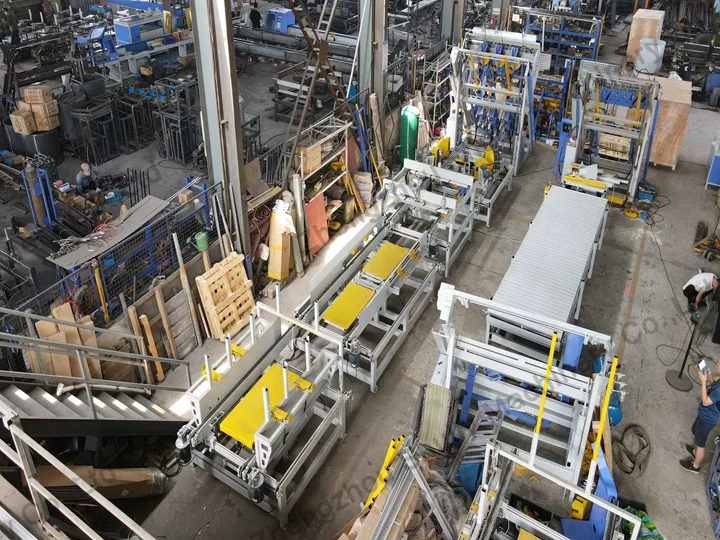
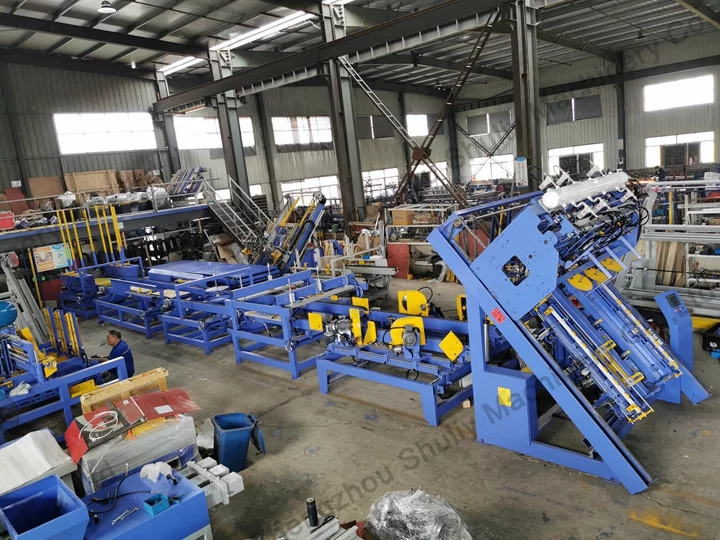
If you plan to mass-produce either Euro Pallet vs GMA Pallet, we supply full sets of dedicated wooden pallet production machines, including pallet nailers, pallet flipping machines and supporting processing equipment.
Our machines are tailor-made to match the different structural standards of Euro Pallet and GMA Pallet, ensuring stable production, high precision and long service life. Feel free to contact us for detailed machine parameters and customized solutions.