
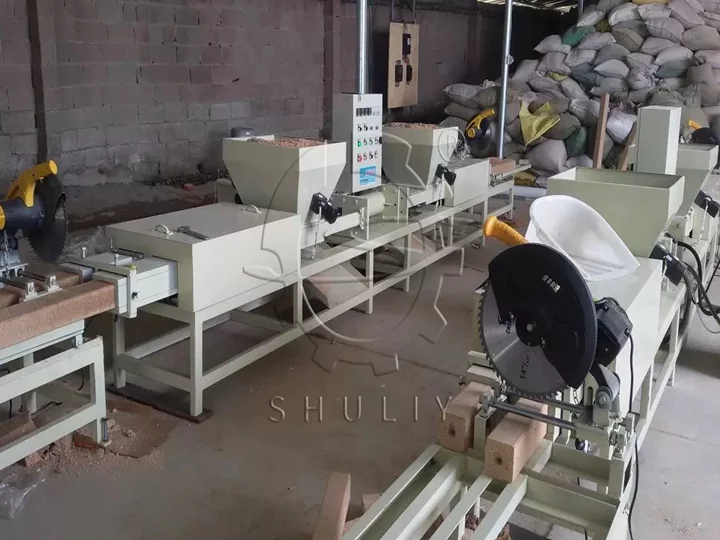
A pallet block making machine can convert wood waste such as sawdust, wood shavings, and wood chips into strong and uniform pallet blocks. These blocks are widely used as support feet in wooden pallets for logistics and transportation.
Through a combination of heat, pressure, and molding technology, the machine transforms loose biomass materials into dense and durable blocks suitable for industrial use.
Raw Material Preparation
The production process begins with preparing suitable raw materials. Common materials include sawdust, wood shavings, and other wood processing residues. These materials are usually crushed into fine particles and kept at a controlled moisture level to ensure stable compression during molding.
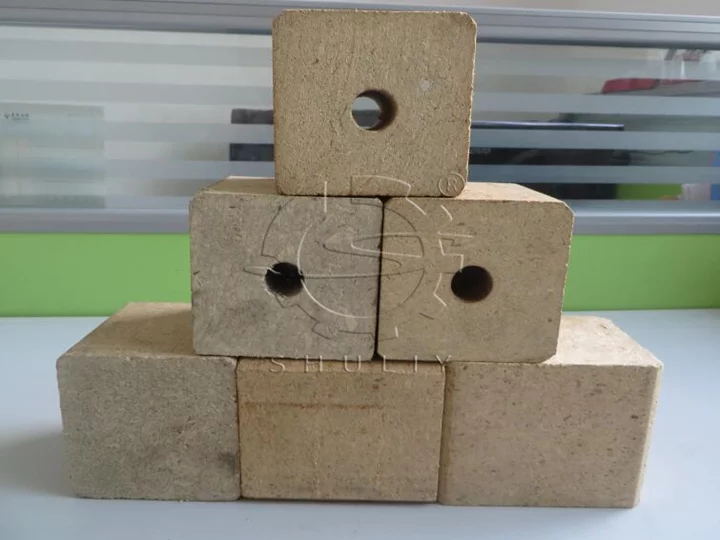
In many cases, the sawdust is mixed with a binding agent such as urea-formaldehyde resin glue to improve bonding strength and durability. This mixture ensures that the final pallet blocks maintain structural integrity during heavy load use.
High-Temperature and High-Pressure Compression
The key step in the process is compression molding. Inside the pallet block making machine, hydraulic pressure pushes the prepared material into a mold while heating plates maintain a high temperature.
The heat softens the lignin contained in wood fibers, allowing the fibers to bond together naturally while the adhesive further strengthens the structure. As a result, the compressed material forms dense wooden strips with excellent hardness and stability.
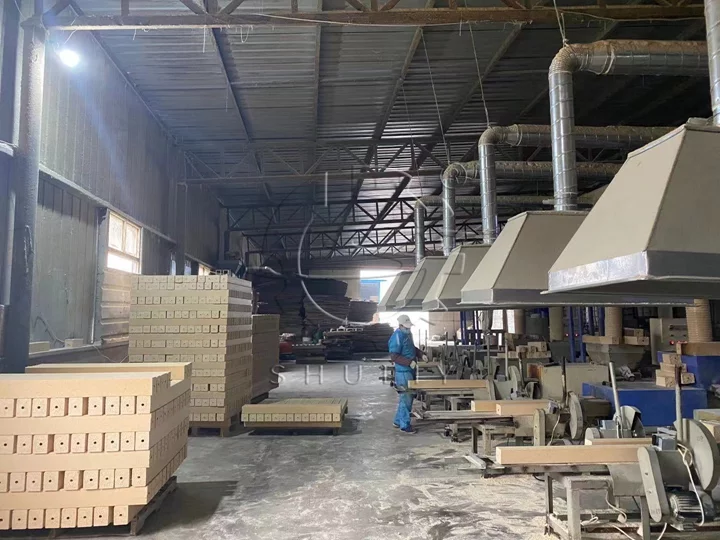
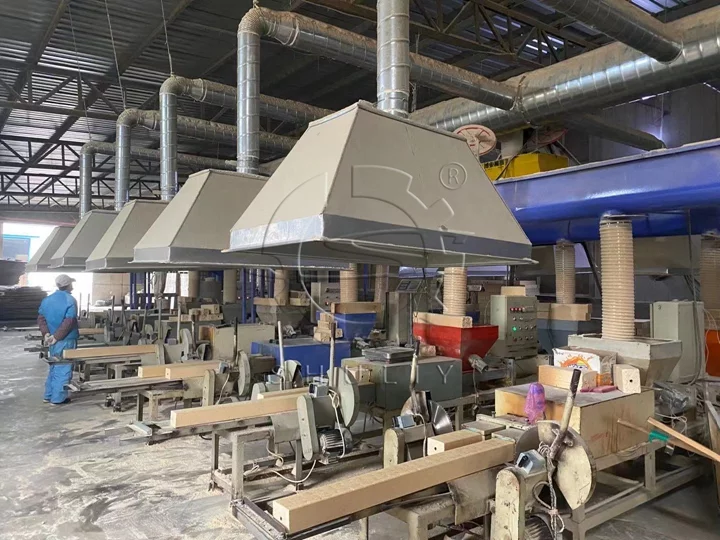
This process produces blocks with densities typically around 550–600 kg/m³, making them strong enough for pallet construction and logistics applications.
Molding and Size Customization
During extrusion, the material passes through a square mold that determines the final block shape. The molds can be easily replaced, allowing manufacturers to produce pallet blocks in different sizes according to customer requirements.
Common block dimensions usually range from about 75 mm to 145 mm in width and height, which are suitable for various pallet designs used in global logistics systems.
Cutting and Cooling Process
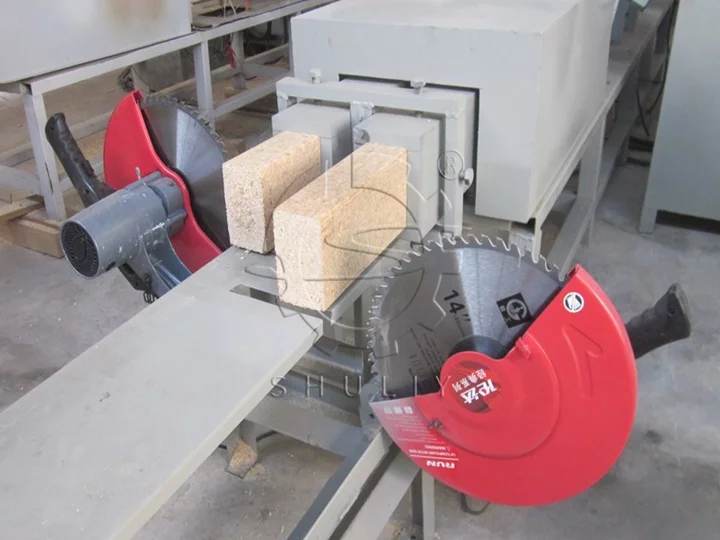
After the compressed wooden strip is formed, it is cut into uniform lengths using a cutting system. The blocks are then cooled and stabilized to ensure their shape and strength remain consistent.
This step produces standardized pallet blocks that are ready for assembly into wooden pallets.
Advantages of Compressed Pallet Blocks
Pallet blocks produced by these machines offer several practical benefits. They have a smooth surface, high density, and strong nail-holding capacity, which makes them suitable for pallet assembly.
Another advantage is that compressed pallet blocks are typically fumigation-free, meaning they can meet export requirements without additional treatment. This makes them widely used in international shipping and logistics packaging.
Conclusion
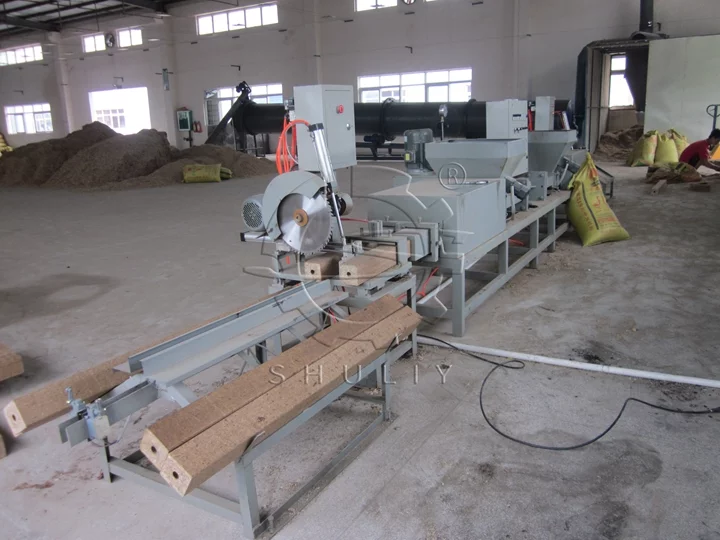
A pallet block making machine efficiently converts wood waste into high-strength pallet blocks through a process of material preparation, heat pressing, extrusion molding, and cutting.
By recycling sawdust and other wood residues, the machine not only improves resource utilization but also provides a reliable solution for producing durable pallet components used in modern logistics systems.