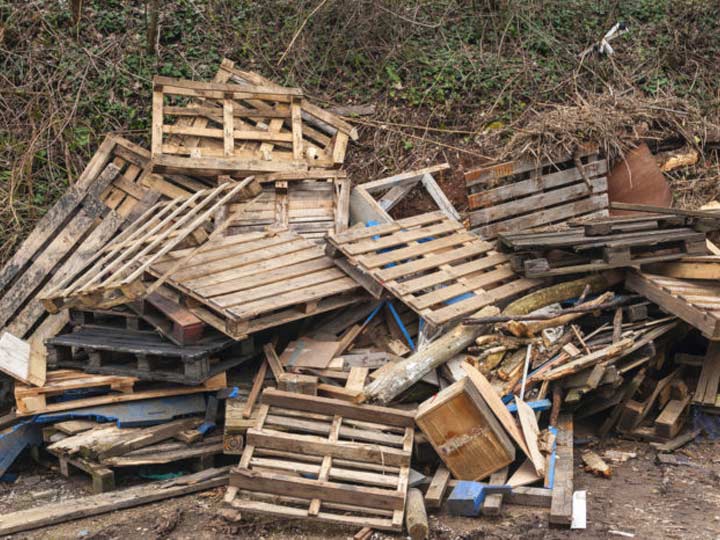
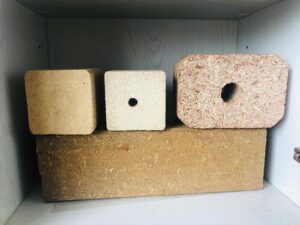
Wood pallet blocks, also known as pallet feet, cushion blocks, or square piers, are essential components of wooden pallets used in logistics and shipping industries worldwide. Understanding the different types of wood pallet blocks helps you make informed decisions for your packaging and transportation needs.
This comprehensive guide covers all major types of pallet blocks, their manufacturing processes, technical specifications, applications, and selection criteria. Whether you’re a pallet manufacturer, logistics manager, or business owner, this article provides valuable insights into choosing the right pallet blocks.
Overview of Wood Pallet Blocks
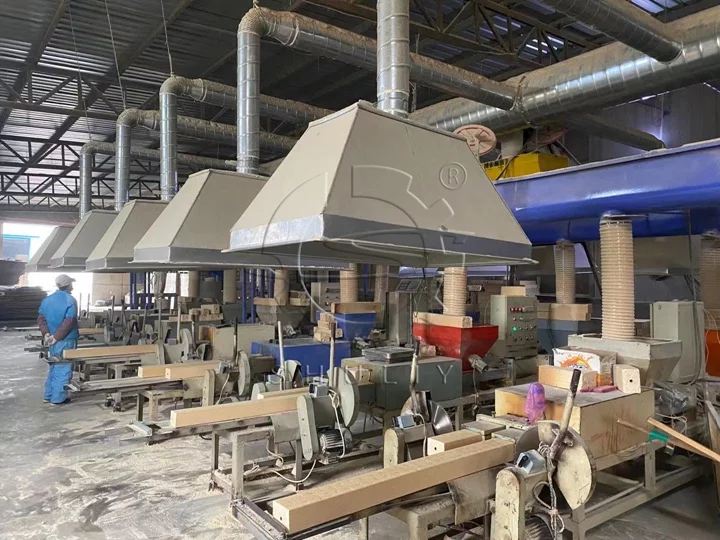
Wood pallet blocks serve as the supporting feet of wooden pallets, providing stability, load-bearing capacity, and forklift access. They are positioned at the corners and sometimes in the middle of pallets to create space between the top and bottom deck boards.
Key Functions of Pallet Blocks:
- Provide structural support for pallet loads
- Create clearance for forklift and pallet jack entry
- Distribute weight evenly across the pallet base
- Elevate goods to prevent moisture damage
- Enable stable stacking in warehouses and containers
Main Types of Wood Pallet Blocks
Wood pallet blocks can be classified into several categories based on their raw materials, manufacturing processes, and structural characteristics:
1. Solid Wood Pallet Blocks
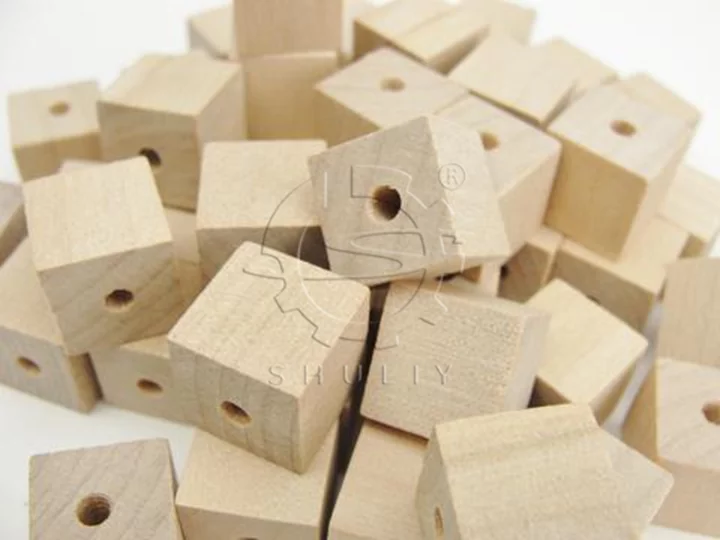
Solid wood blocks are directly manufactured from natural logs or lumber into required specifications. They are among the most traditional and widely used pallet blocks.
Manufacturing Process:
- Select quality logs (pine, fir, hardwood, etc.)
- Cut logs into square or rectangular sections
- Saw into precise lengths (typically 800-1200mm)
- Dry to reduce moisture content (below 20%)
- Optional: Heat treatment for ISPM-15 compliance
Specifications:
| Parameter | Typical Range |
|---|---|
| Dimensions | 75×75mm to 150×150mm (cross-section) |
| Length | 800mm, 1000mm, 1200mm |
| Moisture Content | 15-20% |
| Density | 450-650 kg/m³ (softwood) |
| Load Capacity | 2-5 tons per pallet |
Advantages:
- High natural strength and durability
- Excellent nail-holding capacity
- Can be repaired and reused multiple times
- Biodegradable and environmentally friendly
Disadvantages:
- Higher cost compared to compressed blocks
- Requires fumigation for international shipping (ISPM-15)
- Quality varies with wood grain and knots
- Limited by raw material availability
2. Sawdust Compressed Pallet Blocks
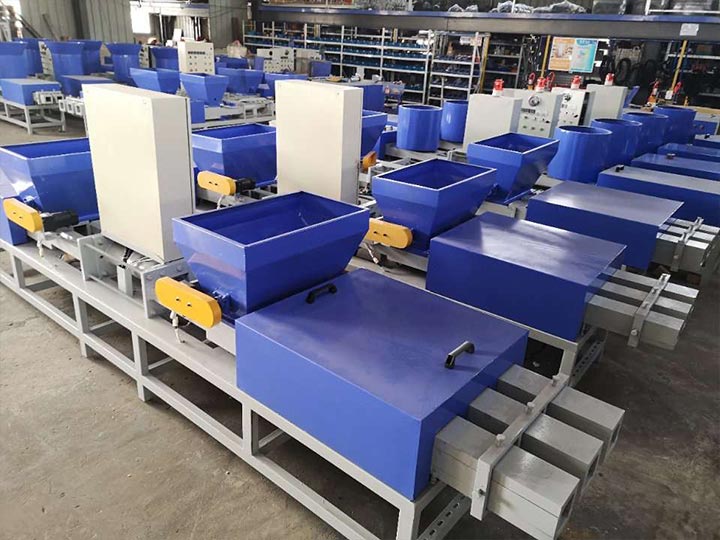
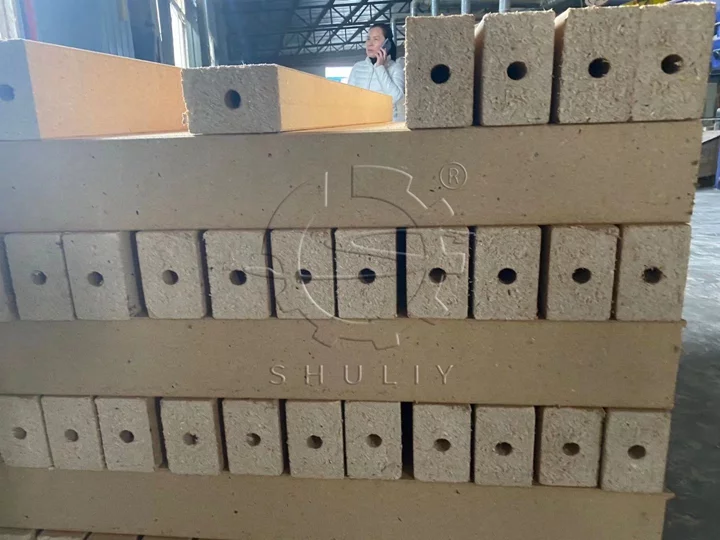
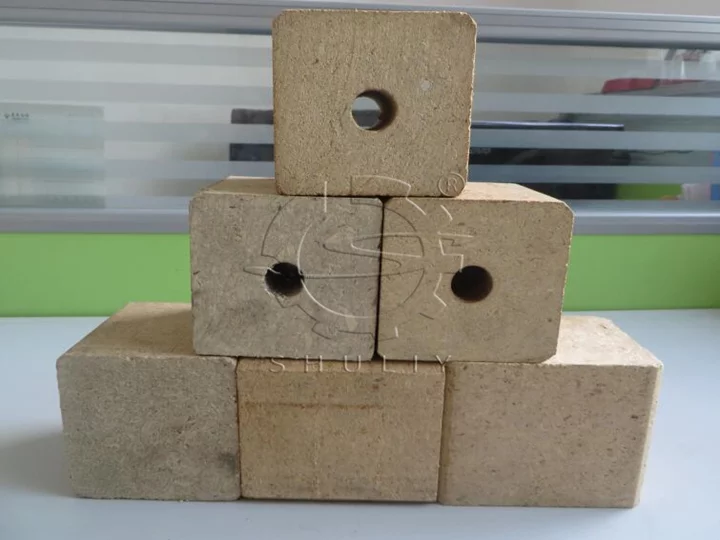
Sawdust pallet blocks (also called compressed wood blocks or engineered wood blocks) are manufactured from wood waste materials such as sawdust, wood chips, and shavings. These blocks are compressed under high temperature and pressure with adhesive binders.
Manufacturing Process:
- Collect and sieve sawdust (particle size 3-10mm)
- Dry sawdust to moisture content below 12%
- Mix with urea-formaldehyde resin glue (12-18% concentration)
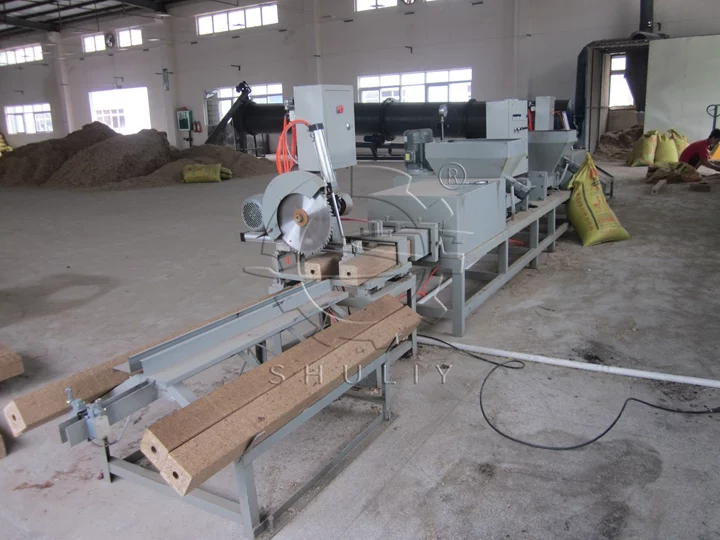
- Feed mixture into hot press machine
- Compress at 150-200°C under high pressure
- Extrude continuous blocks through mold
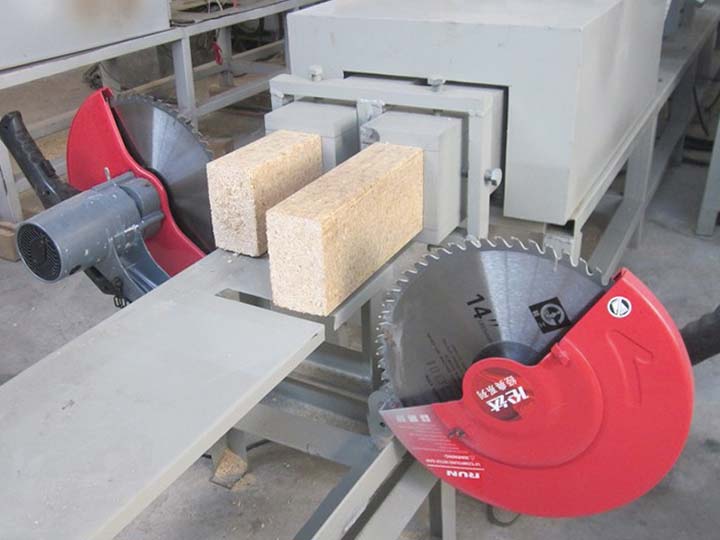
- Cut to required lengths with cutting saw
- Cool and package
Specifications:
| Parameter | Typical Range |
|---|---|
| Dimensions | 75×75mm to 145×145mm (cross-section) |
| Length | Continuous extrusion, cut to 800-1200mm |
| Density | 650-850 kg/m³ |
| Moisture Content | 8-12% |
| Glue Content | 12-18% |
| Daily Output | 2-6 m³ per machine |
Advantages:
- Utilizes wood waste, reducing environmental impact
- Consistent quality and uniform dimensions
- No fumigation required for export (ISPM-15 exempt)
- Lower cost than solid wood blocks
- High density provides excellent load-bearing capacity
- Smooth surface reduces splintering
Disadvantages:
- Lower impact resistance compared to solid wood
- Cannot be repaired if damaged
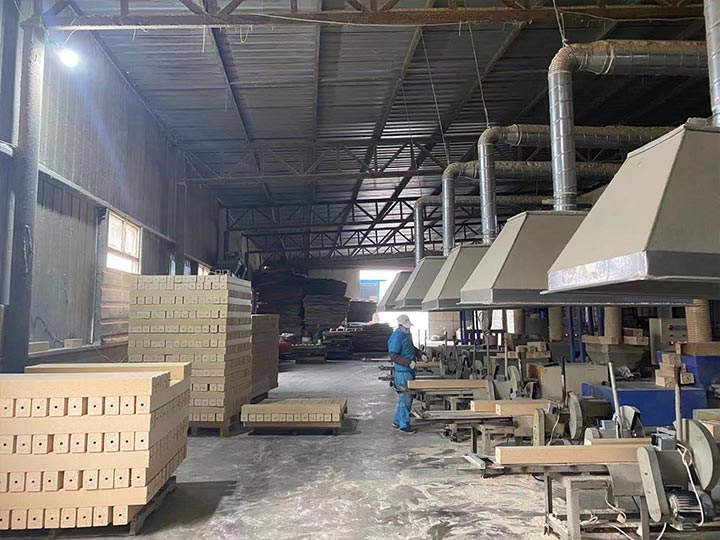
- Requires specialized manufacturing equipment
- Contains synthetic adhesives
3. Plywood/Laminated Pallet Blocks
Plywood pallet blocks are manufactured by laminating multiple layers of wood veneers or composite boards together under pressure. These blocks offer excellent dimensional stability and strength.
Manufacturing Process:
- Stack plywood sheets or composite boards
- Apply adhesive between layers
- Press under high pressure and temperature
- Cut into required block sizes
- Machine to precise dimensions
Specifications:
| Parameter | Typical Range |
|---|---|
| Dimensions | 80×80mm to 150×150mm |
| Length | 800-1200mm |
| Layers | 5-15 plies |
| Density | 550-750 kg/m³ |
| Moisture Content | 10-15% |
Advantages:
- Excellent dimensional stability
- Uniform strength in all directions
- Resistant to warping and splitting
- Smooth surface finish
- Can be made from recycled wood
Disadvantages:
- Higher manufacturing cost
- Complex production process
- May contain formaldehyde-based adhesives
4. Pallet Blocks with Holes vs. Non-Hole Blocks
Compressed sawdust pallet blocks can be further categorized based on their structural design:
Pallet Blocks with Holes
- Design: Feature a central longitudinal hole (typically 20-40mm diameter)
- Purpose: Allows methanol and water vapor to escape during production
- Advantages: Better air permeability, reduced moisture retention, longer service life
- Considerations: Care must be taken when nailing to avoid the central hole
Non-Hole Pallet Blocks
- Design: Completely solid with no holes
- Advantages: Easier nailing, uniform stress distribution, higher load-bearing capacity
- Considerations: May require longer drying time during production
Comparison Table: Pallet Block Types
| Feature | Solid Wood | Sawdust Compressed | Plywood |
|---|---|---|---|
| Cost | High | Low | Medium-High |
| Density | 450-650 kg/m³ | 650-850 kg/m³ | 550-750 kg/m³ |
| Load Capacity | High | Medium-High | High |
| Moisture Resistance | Medium | Medium | Good |
| Export Compliance | Requires fumigation | Exempt (ISPM-15) | Exempt (ISPM-15) |
| Reusability | Excellent | Limited | Good |
| Environmental Impact | Low (if sustainable) | Low (uses waste) | Medium |
| Production Speed | Medium | High | Medium |
How to Choose the Right Pallet Blocks
Consider these factors when selecting pallet blocks for your application:
- Load Requirements: Determine the maximum weight your pallet needs to support. Heavy loads (>2 tons) require solid wood or high-density compressed blocks.
- Export Needs: For international shipping, choose ISPM-15 compliant blocks (sawdust or plywood) to avoid fumigation costs and delays.
- Budget: Sawdust compressed blocks offer the best cost-performance ratio for most applications.
- Reusability: If you need reusable pallets, invest in solid wood blocks. For one-way shipping, compressed blocks are more economical.
- Production Volume: High-volume pallet manufacturers benefit from automated sawdust block production lines.
- Environmental Considerations: Sawdust blocks utilize wood waste, making them an eco-friendly choice.
Pallet Block Manufacturing Equipment
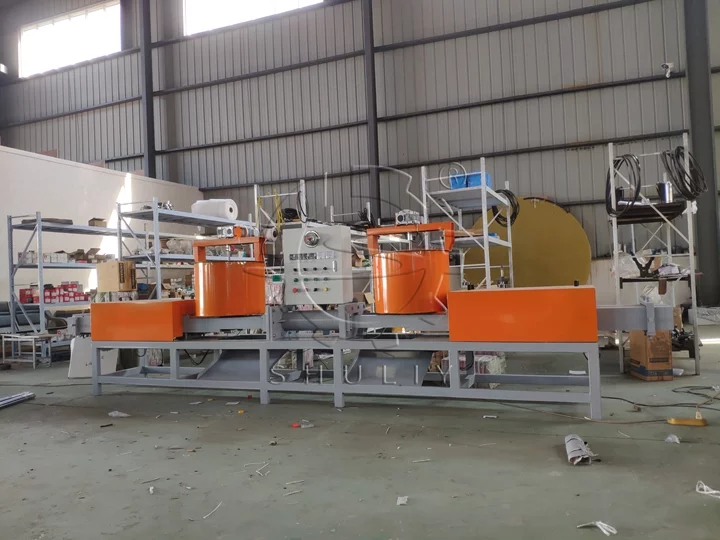
For businesses interested in producing their own pallet blocks, we offer complete sawdust wood pallet block machine solutions:
- Model SL-75/2: 75×75mm blocks, 3.5m³/day, 15kW power
- Model SL-90/2: 90×90mm blocks, 4m³/day, 15kW power
- Model SL-100/2: 100×100mm blocks, 5m³/day, 18kW power
- Model SL-120: 100×120mm blocks, 3.5m³/day, 15kW power
- Model SL-145: 145×145mm blocks, 3.5m³/day, 18kW power
Complete production lines include hammer mill, sawdust dryer, automatic mixer, pallet block press machine, and cutting machine.
Conclusion
Understanding the different types of wood pallet blocks is essential for selecting the right solution for your packaging and logistics needs. Solid wood blocks offer traditional strength and reusability, sawdust compressed blocks provide cost-effectiveness and export compliance, while plywood blocks deliver dimensional stability for specialized applications.
For pallet manufacturers looking to reduce costs and improve efficiency, investing in a wood pallet block making machine can significantly enhance production capabilities and profitability.
Related Resources:
- Sawdust Wood Pallet Block Machine – Complete production line for compressed sawdust blocks
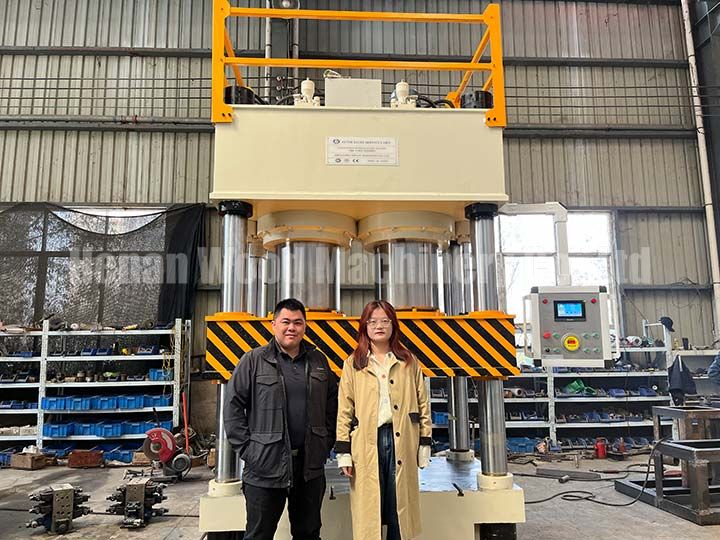
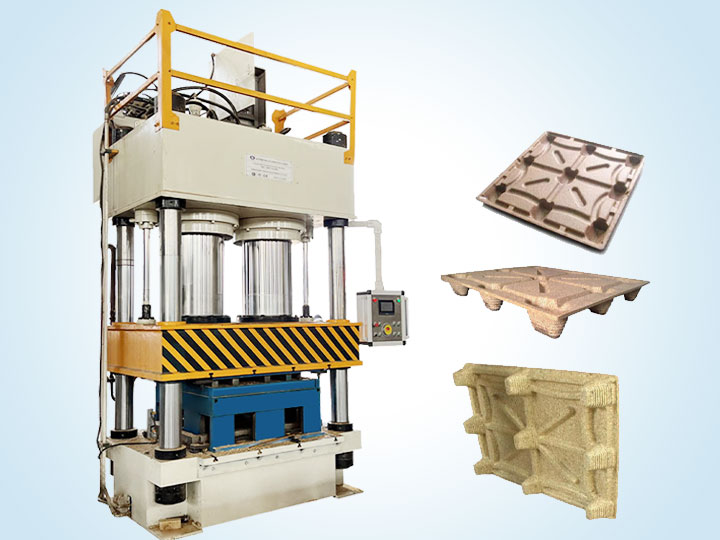
- Wood Pallet Press Machine – Hydraulic press for complete pallet production
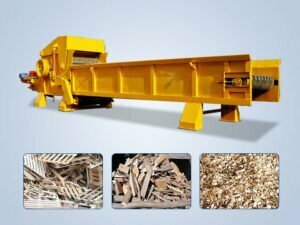
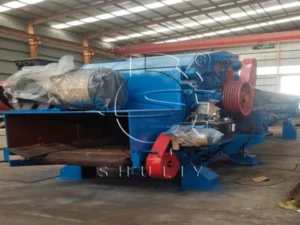
- Industrial Wood Pallet Shredder – Recycle waste pallets into raw materials
- Wood Crusher Shredder – Raw material preparation for pallet block production